
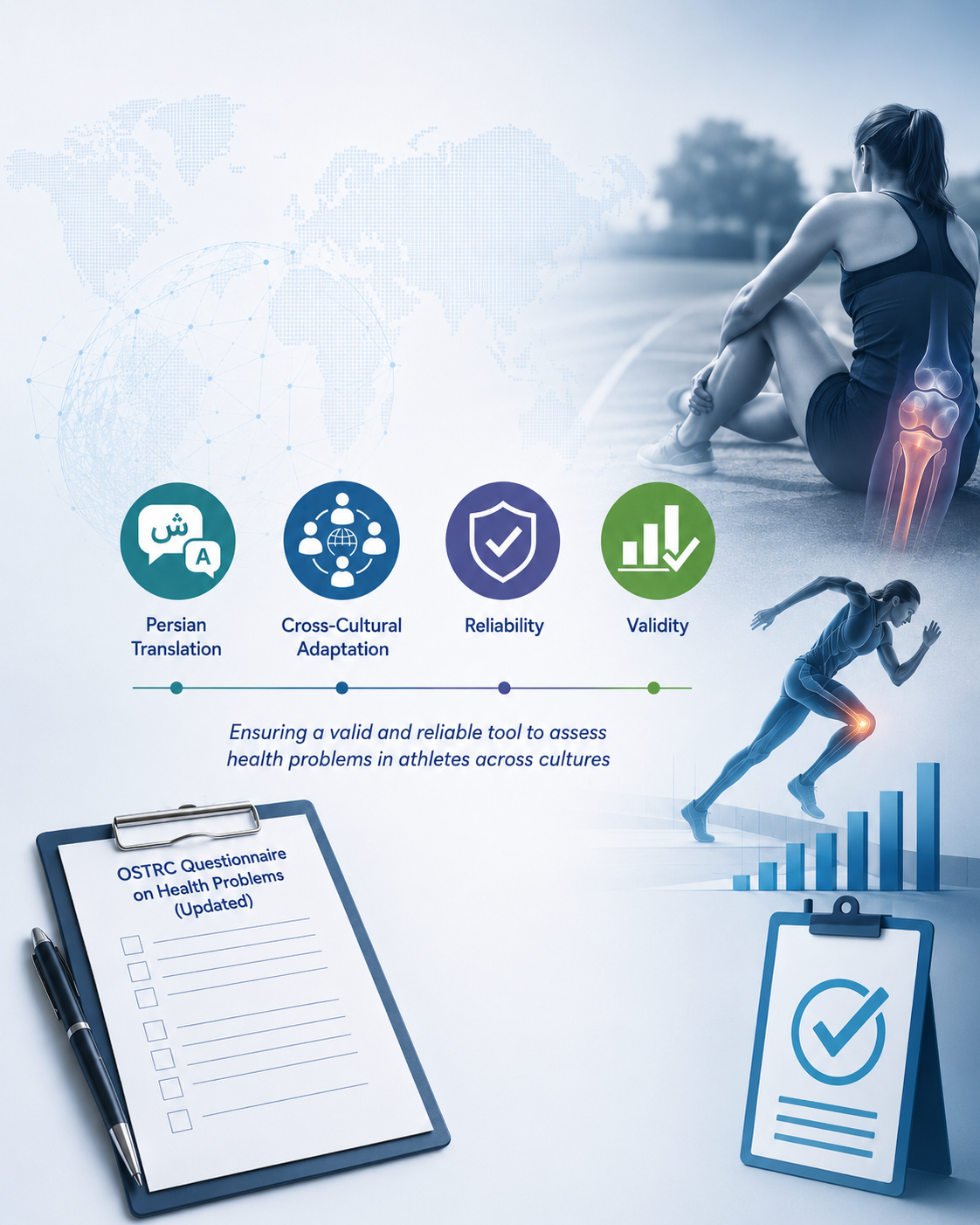
Persian translation, cross-cultural adaptation, reliability, and validity of the updated Oslo sports trauma research centre questionnaire on health problems
Authors
Mohammad Alimoradi 1,2, Serkan Kabak 3, Tayfun Kara 4, Yasar Barut 5, Hassan Daneshmand 6, Mohammad Alghosi 7*
- Department of Sports Injuries and Corrective Exercises, Faculty of Sports Sciences, Shahid Bahonar University of Kerman, Kerman, Iran
- HERC- Health, Exercise and Research Center, Mina Rashid, Dubai Maritime City, Dubai, United Arab Emirates
- Faculty of Sports Sciences, Trabzon University, Trabzon, Türkiye
- Faculty of Sports Sciences, Kahramanmaraş Sütçü İmam University, Kahramanmaraş, Türkiye
- Department of Child-Development, Child-Development Division, Faculty of Health Sciences, Ondokuz Mayis University, Samsun, Türkiye
- Department of Sports Injury and Corrective Exercise, Faculty of Physical Education and Sport Sciences, University of Guilan, Rasht, Iran
- Department of Physical Education, Technical and Vocational University (TVU), Tehran, Iran
Phase
Published in BMC Sports Science Medicine & Rehabilitation
The Project
Abstract
Background:
The Oslo Sports Trauma Research Centre Questionnaire on Health Problems (OSTRC-H2) is a validated tool in its original English version for monitoring the full spectrum of health issues in athletes, but no Persian version exists. This study aimed to translate, culturally adapt, and evaluate the reliability and measurement properties, including internal consistency, test-retest reliability, and construct validity, of the Persian version of the updated OSTRC-H2 questionnaire for use with Persian-speaking elite athletes.
Methods:
This methodological study employed a cross-sectional and longitudinal design. The OSTRC-H2 was translated into Persian following international guidelines. A total of 207 elite athletes from various sports completed the questionnaire at baseline and again after 72 h for test-retest reliability. To evaluate feasibility and describe the prevalence of health problems in this cohort, defined as any reported issue according to the OSTRC-H2 case definition, athletes also completed the questionnaire weekly for 12 weeks. Measurement properties evaluated included internal consistency (Cronbach’s alpha), test-retest reliability (intraclass correlation coefficient, ICC(2,1)), construct validity (Spearman correlations with pain, days lost, and training load), responsiveness (standardized response mean [SRM], effect size [ES]), and floor/ceiling effects.
Results:
The response rate was 98% (2435/2484 weekly questionnaires). The mean weekly prevalence of any health problems was 25.3% (95% CI: 23.6–27.0). Of the 628 health problems reported, acute injuries were most common (59.5%), followed by overuse injuries (28.3%) and illnesses (12.1%). Test-retest reliability was strong (ICC range: 0.82–1.00), and internal consistency was high (Cronbach’s alpha range: 0.81–1.00). The severity score showed strong positive correlations with pain intensity (rₛ range: 0.703–0.812) and days lost (rₛ range: 0.752–0.881), and moderate negative correlations with weekly training load. The questionnaire demonstrated large responsiveness to changes in health status (SRM range: 1.58–1.92; ES range: 1.83–2.21). No significant floor or ceiling effects were detected.
Conclusions:
The Persian OSTRC-H2 is a feasible, reliable, valid, and responsive instrument for comprehensive health problem surveillance in Persian-speaking elite athletes. It is recommended for use in sports surveillance and monitoring programs to track the burden of injury and illness in this population.